

Most people buy a mountain bike because it is the familiar shape, then discover two months later that it is heavy and slow on tarmac and a hybrid was what they needed. This article compares the types practically, so you choose by how you actually ride rather than by looks.
The quick comparison
| Criterion | Mountain | Hybrid | Road | City / step-through |
|---|---|---|---|---|
| Speed on tarmac | Low | High | Highest | Low |
| Durability off-road | Highest | Moderate | Very poor | Poor |
| Riding comfort | Good | Excellent | Low | Best |
| Typical weight | 14 – 17 kg | 11 – 15 kg | 8 – 11 kg | 15 – 18 kg |
| Running cost | Moderate | Low | High | Lowest |
| Beginner friendly | Yes | Very | No | Yes |
| Best use | Dirt and farm roads | Daily riding | Long fast distances | Short trips, shopping |
The mountain bike — when it is the right call
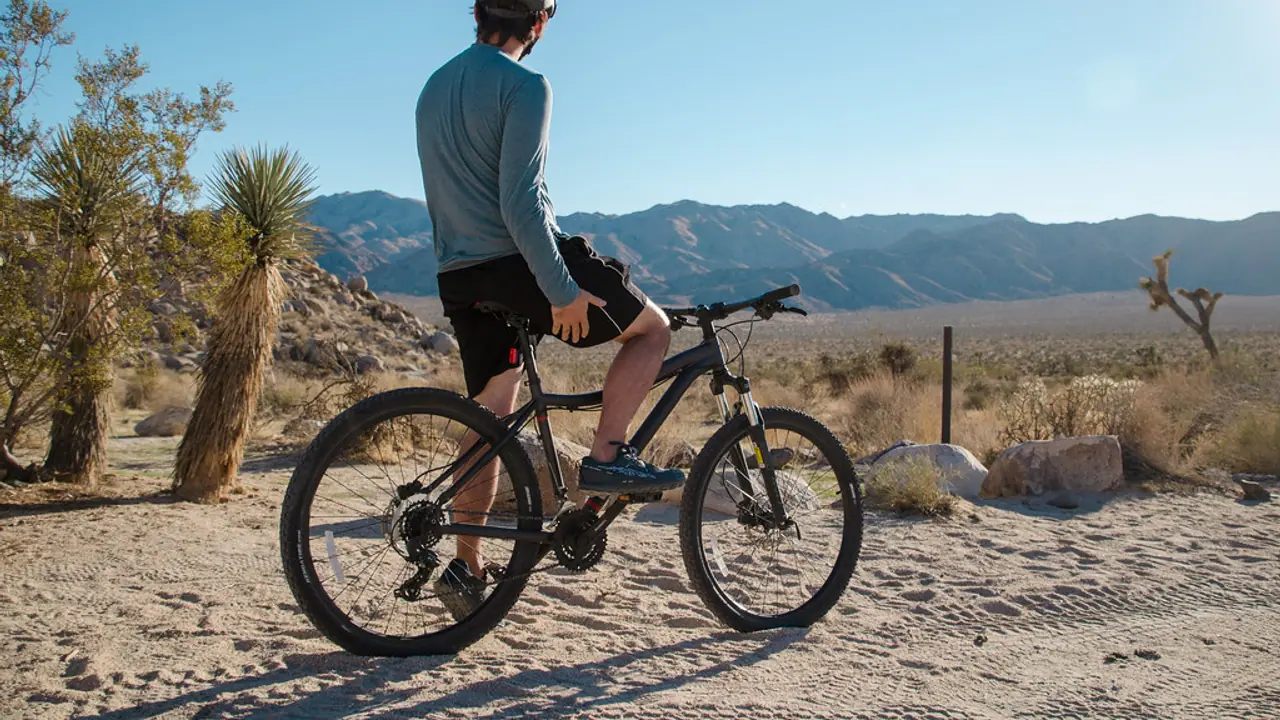
A mountain bike is built for durability, not speed. Wide knobby tyres grip dirt and sand, suspension absorbs impacts, and the frame is stronger than any other type. All of that has a price: more weight, more rolling resistance on tarmac, and a slightly forward position that tires your wrists on long rides.
- Choose it if you ride farm or dirt roads more than half the time.
- Choose it if your local streets are full of potholes and broken surfaces.
- Choose it if you carry loads or ride uneven ground.
- Skip it if 90% of your riding is on tarmac — you will feel like you are pedalling twice as hard.
The hybrid — the best choice for most people
A hybrid takes the comfortable frame and posture of a mountain bike and fits narrower semi-slick tyres, so it comes out lighter and faster on tarmac while still handling dirt without drama. If you are undecided, this is the choice you are least likely to regret.
The road bike — for speed and distance only
Very narrow tyres, a light frame and drop bars that put you in an aerodynamic position. By far the fastest on tarmac, but uncomfortable for beginners, unforgiving over potholes, and those thin tyres puncture easily on Egyptian roads full of grit.
- Choose it if you ride more than 30 km at a time on good surfaces.
- Choose it if speed or racing is the goal.
- Skip it if this is your first bike, or if you ride in heavy traffic.
City and step-through bikes — comfort above all
A low step-through frame you can ride in any clothing, a fully upright position, basket and rack, and usually either a single speed or a maintenance-free 3-speed hub. Neither fast nor light, but the easiest and most comfortable for short trips and shopping. If you ride in a dress or galabeya, it is the only genuinely practical option.
The decision tree in three questions
- 1.What do you ride on most? Tarmac → hybrid or road. Dirt and farm tracks → mountain. A mix → hybrid.
- 2.How far per ride? Under 10 km → city or hybrid. 10–30 km → hybrid. Over 30 km → road or fitness hybrid.
- 3.Why do you ride? Errands and shopping → city. Fitness → fitness hybrid or road. Adventure → mountain or gravel.
Is a mountain bike stronger than a hybrid?
A mountain frame is designed for higher impact loads, but that difference is invisible in normal use. A hybrid handles Egyptian streets and speed bumps without trouble. The gap only shows up in jumping and drops.
Can I convert a mountain bike into a hybrid?
Almost. Swap the wide knobby tyres for narrower semi-slicks (1.5–1.75 in) and lock out the fork if it has a lockout. That change alone cuts rolling resistance noticeably and makes the bike meaningfully faster on tarmac for very little money.
What is the best type for a first bike?
A hybrid, because it covers the widest range of use with the fewest compromises: comfortable posture, fast enough, tough enough for real streets, and cheap to maintain. If you later discover you care about speed or adventure, specialise with your second bike.