


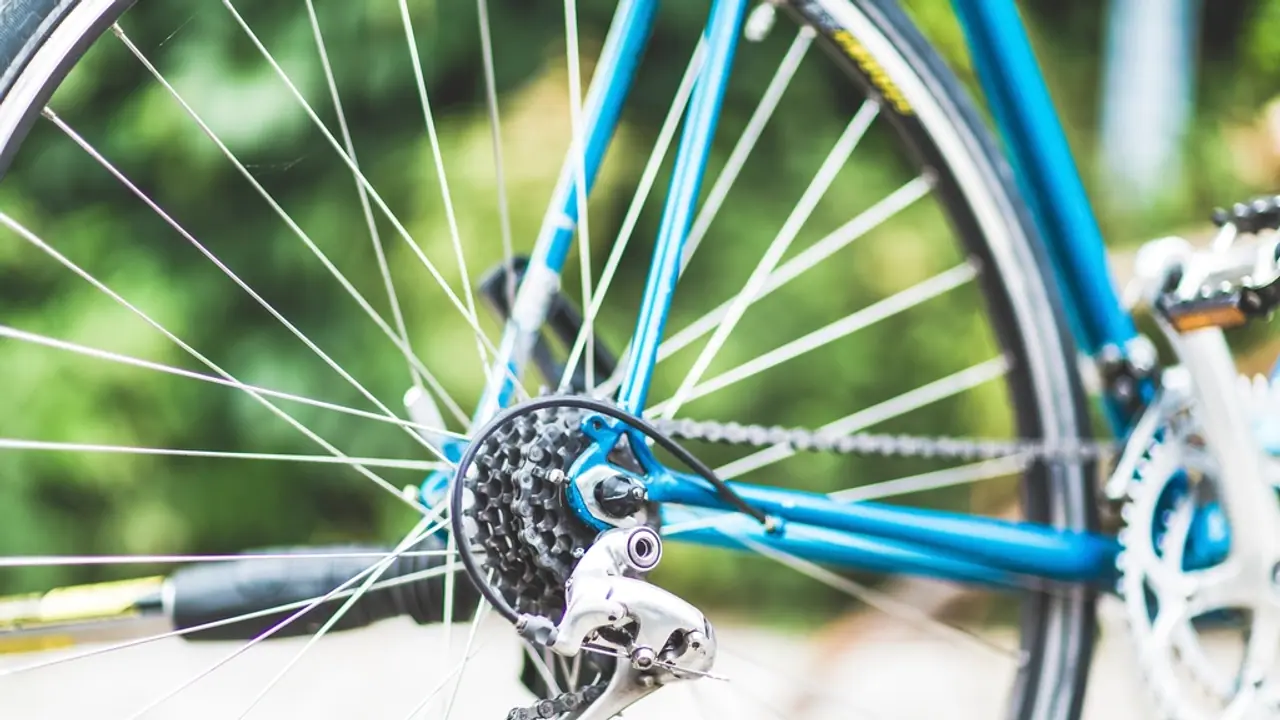
Everyone asks “how many speeds does it have?” as if a bigger number is better. In reality 21 speeds does not mean 21 useful gears, and a 7-speed bike may suit you better than a 27-speed. This article explains the logic rather than the marketing.
How the speed count is worked out
Speeds = front chainrings × rear sprockets. Three at the front and seven at the back gives 21. One at the front and twelve at the back gives 12. The catch is that those combinations overlap heavily — of a nominal 21 you get roughly 14 genuinely distinct ratios, and the rest are duplicates.
What each sprocket does
- Small front ring = climbing. Very easy to turn but slow.
- Middle front ring = normal riding; you will be here 80% of the time.
- Large front ring = descending and speed on the flat. Hard to turn, fast.
- Rear sprockets = fine tuning inside each range. Bigger rear = easier, smaller rear = harder.
How many speeds do you actually need?
| Use | Suitable count | Why |
|---|---|---|
| Short trips on flat ground | Single speed or 3 | Almost no maintenance, total simplicity |
| Daily city riding | 7 – 8 speeds | Enough range, easy to service |
| Hybrid for distance | 18 – 21 speeds | Flexibility on climbs and flats |
| Mountain and rough ground | 21 – 27 speeds | Needs very low ratios for climbing |
| Modern performance mountain | 1 × 11 or 1 × 12 | Wide range from a single ring — simpler and lighter |
Using the gears properly
- 1.Shift before you need to, not after. Spot the climb early and drop down while you are still turning easily.
- 2.Ease off the pedals as you shift — the chain needs slack to jump across.
- 3.Never shift while stationary — it will not engage, and the chain can drop.
- 4.Aim for a steady cadence of about 70–90 rpm. If you are grinding slowly with force, shift down.
The mistake that kills chains: cross-chaining
Cross-chaining means running the big front ring with the big rear sprocket, or the small front with the small rear. Either way the chain is pulled at a sharp angle: it rattles, wears fast and can drop off.
- Small front ring → use the large and middle rear sprockets.
- Middle front ring → almost the whole rear range is fine.
- Large front ring → use the small and middle rear sprockets.
- The simple rule: constant rattling means you are cross-chained — change the front ring.
Internal hub gears: the maintenance-free alternative
City bikes often hide 3 or 7 speeds inside the rear hub instead of exposed sprockets. The upsides: you can shift while stationary, there is nothing exposed to dirt or rust, and maintenance is almost nil. The downsides: a narrower range, more weight, and repairs need a specialist workshop.
My gears rattle when I shift — why?
Two common causes: the derailleur needs indexing (adjusted with the barrel adjuster on the cable), or you are cross-chained. Change the front ring first; if the noise persists, the bike needs indexing.
My chain keeps dropping off
Usually the limit screws on the front derailleur are out of adjustment, or the chain is worn and stretched. Both are fixed in a workshop in under half an hour.
Can I add more speeds to my bike?
In theory yes, but in practice the cost usually approaches that of a better bike. Going from 7 to 9 speeds needs a new cassette, derailleur, shifter and chain, and sometimes a new rear wheel. Worth it if the base bike is good; otherwise buy the better bike.