

Most serious bike collisions happen at night or at dusk, and the cause is almost always the same: the driver did not see you in time. This article is about visibility — how to actually be seen, rather than merely having a light.
Being seen matters more than seeing
Most people buy a powerful headlight so they can see the road, and forget the rear. But the statistics say most collisions come from behind or from the side at junctions. Which means your red rear light and your side reflectors matter more than headlight power.
The three layers of visibility
- 1.Active lights: white at the front, red at the rear. Use flashing mode in town where it draws the eye, and steady on dark roads where you need to see.
- 2.Passive reflectors: on the wheels, pedals and rear. These cover your sides — the most dangerous angle at junctions.
- 3.Clothing: anything light-coloured or with reflective strips. Black clothing at night makes you nearly invisible even with lights.
Where to ride on the road
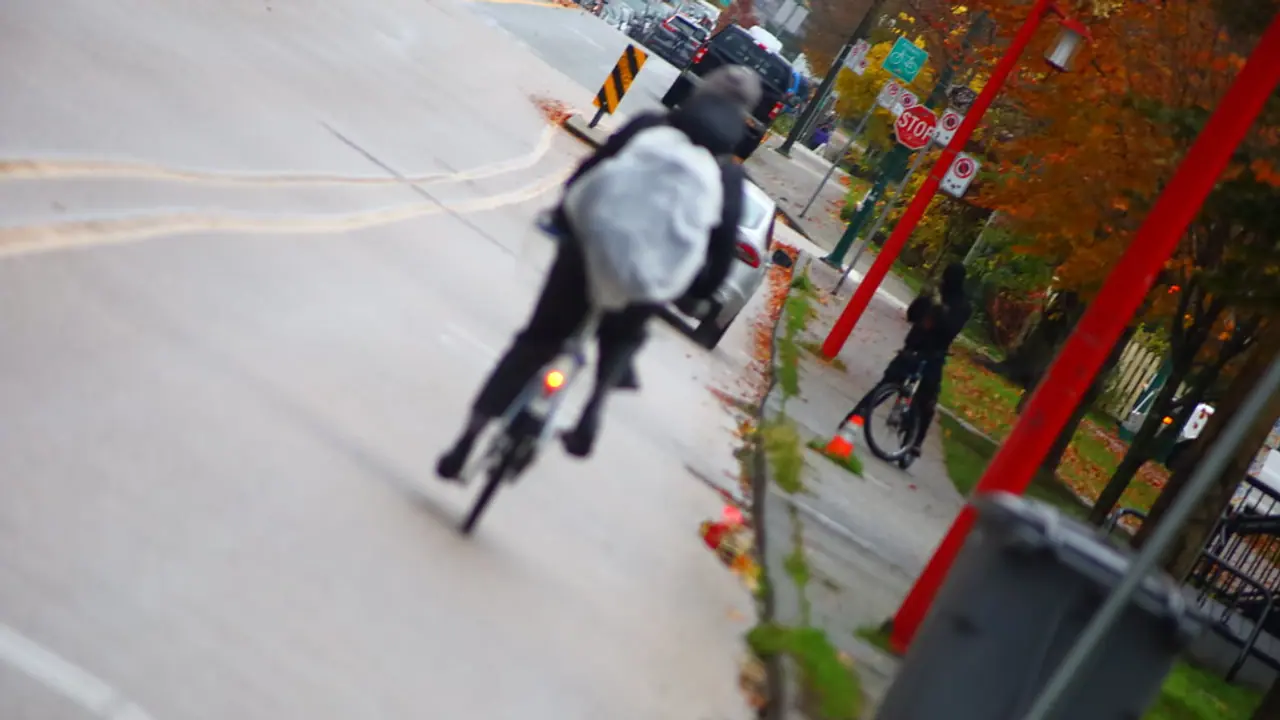
- Ride about a metre out from the kerb or parked cars — not hugging the edge. Hugging puts you in the blind spot and in the path of an opening door.
- Hold a straight, predictable line. Weaving between cars confuses drivers.
- At junctions, take your place clearly in the lane rather than sitting at the edge, so turning drivers see you.
- Stay entirely out of the blind spots of lorries and buses — if you cannot see the driver’s mirror, they cannot see you.
What is specific to Sharqia roads
- Farm roads are often unlit, narrow and edged by a canal. A strong light (400 lumens and up) is necessary, not a luxury.
- Tuk-tuks and motorcycles appear suddenly from side turnings — slow down at every village entrance.
- Animal carts usually carry no reflectors at all — ride at a speed that lets you stop within the distance you can see.
- In winter, morning fog over farmland cuts visibility sharply. Postpone the ride or use a flashing light.
Winter: a few extras
- A wet road lengthens braking distance, especially with V-brakes. Start braking earlier.
- Drop 5 psi in the rain for better grip.
- Mudguards matter more than you think — not just for cleanliness, but because spray onto your rear light dims it.
- Cold hands weaken your grip on the brake levers. Thin gloves are a safety item, not just comfort.
Flashing or steady?
In town and on lit streets, flashing draws attention better. On dark roads, steady at the front so you can see, flashing at the rear. If you have two rear lights, run one steady and one flashing.
How bright a light do I need?
Lit streets: 100–200 lumens is enough to be seen. Dark roads: 400–800 lumens to actually see the surface. Above 1,000 lumens can dazzle oncoming drivers — angle the beam slightly down.
Are reflectors alone enough?
No. A reflector only works when headlights strike it at the right angle — so it does nothing if a car approaches from an angle or has weak lights. Reflectors complement lights; they never replace them.